Back to Blog
Building My Developer Portfolio with Next.js
Next.jsReactTypeScriptPortfolio
\
Why I Built a Custom Portfolio
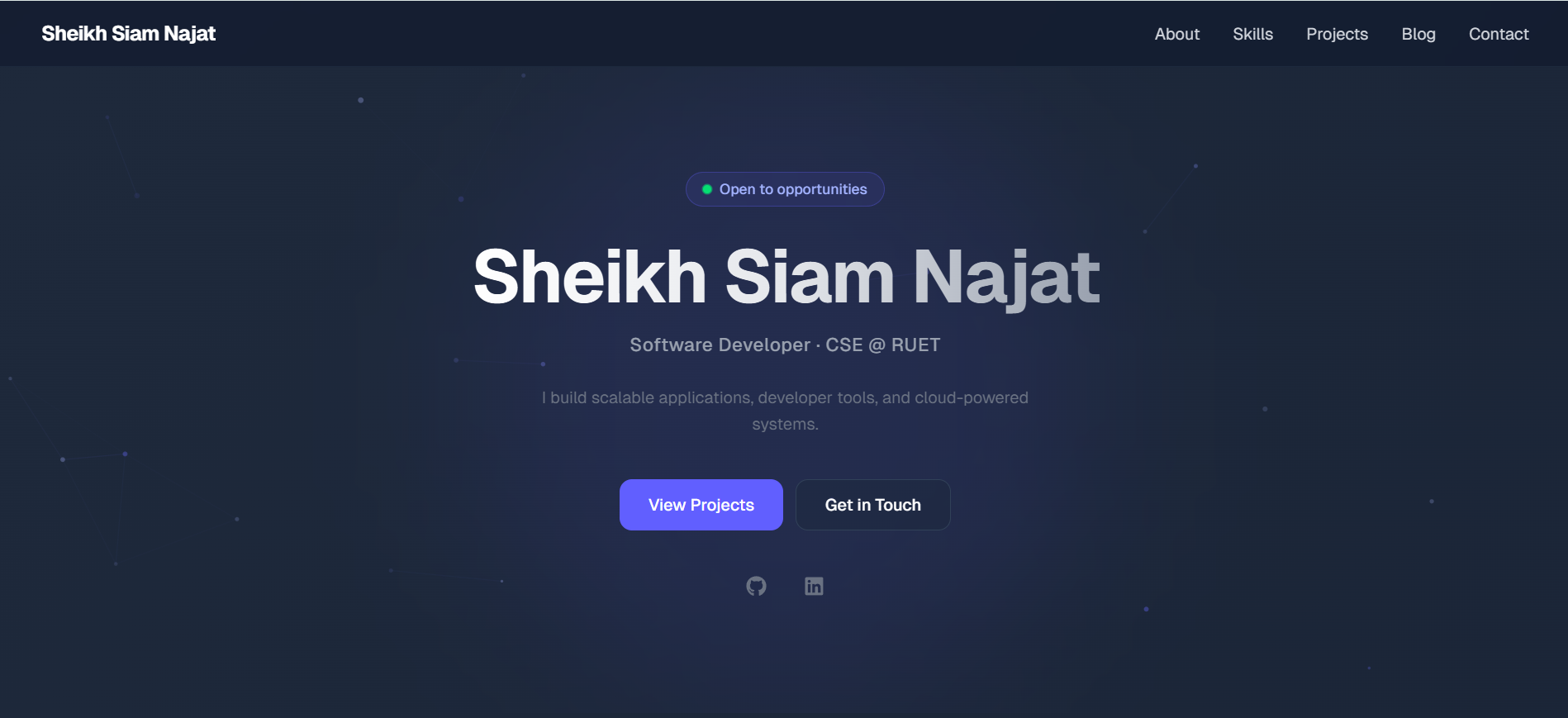
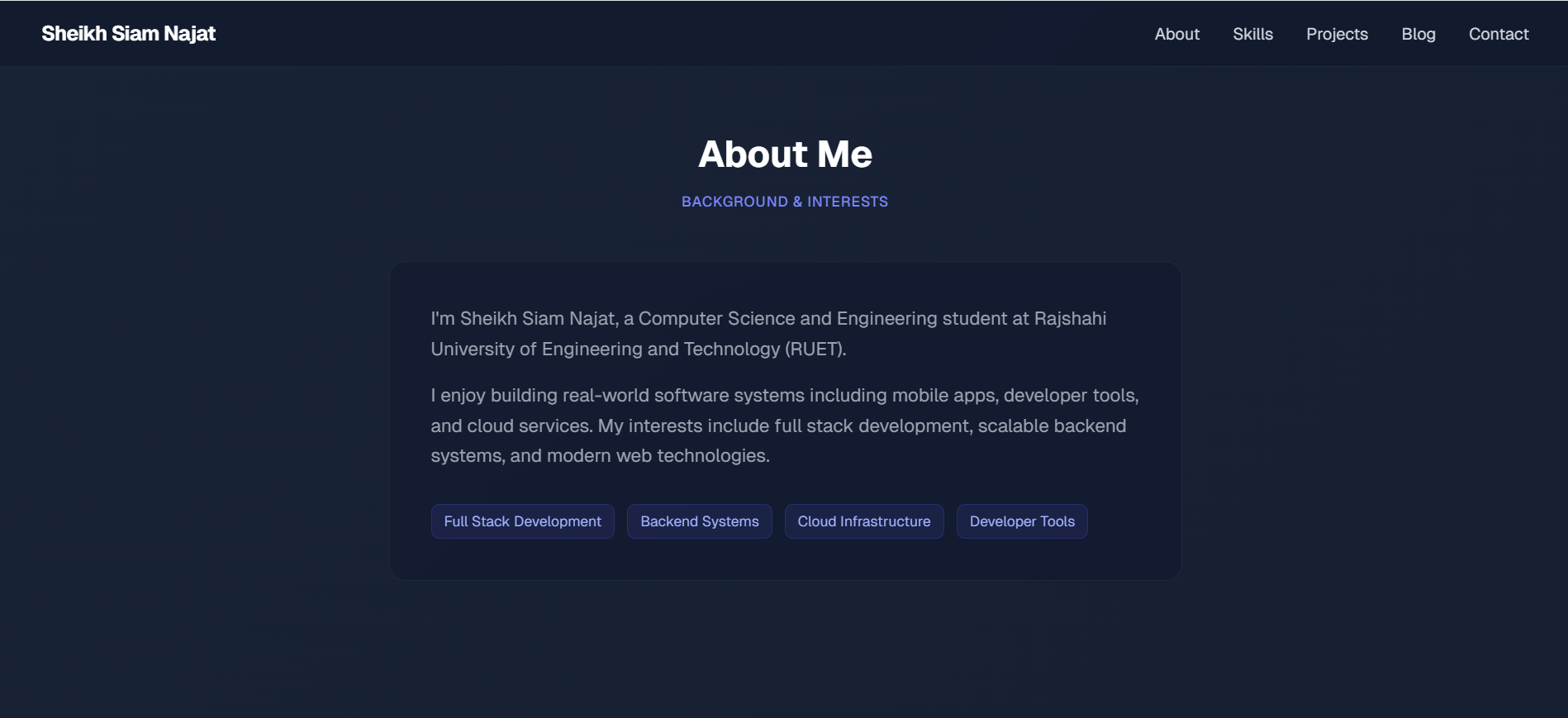
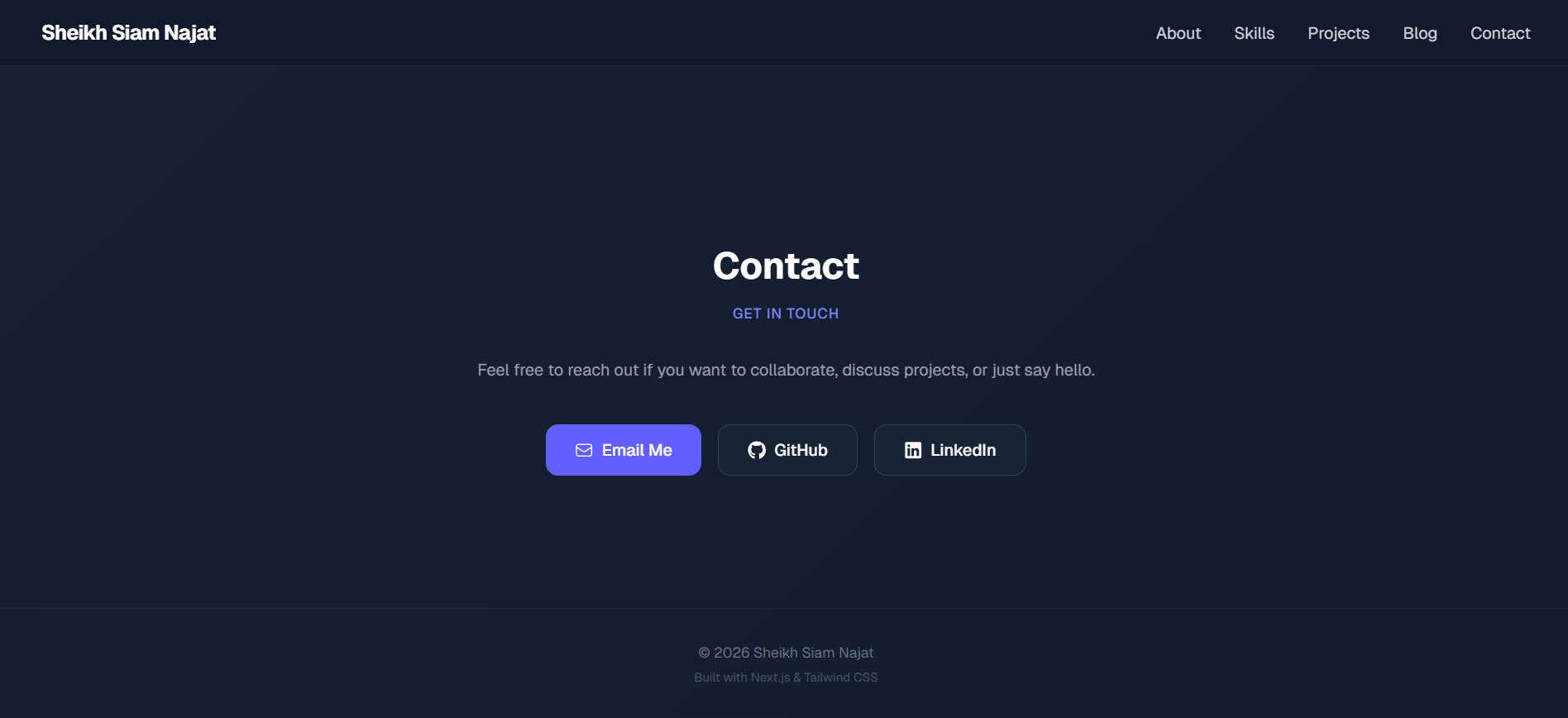
Instead of using a template, I decided to build my portfolio from scratch using Next.js and TailwindCSS. This gave me full control over the architecture, performance, and design.
Tech Stack
- Next.js 16 with App Router for server-first rendering
- TypeScript in strict mode for type safety
- TailwindCSS for utility-first styling
- Vercel for deployment with automatic previews
Architecture Decisions
The project follows a layered component architecture:
- Types layer — shared TypeScript interfaces
- Config layer — centralized data management
- UI primitives — reusable components like GlassCard and Badge
- Section components — page sections that compose UI primitives
- Page layer — final composition with animations
Key Features
Some of the features I'm most proud of:
- Interactive particle background using tsparticles
- Glassmorphism design with backdrop-blur effects
- Scroll-triggered reveal animations via IntersectionObserver
- Project case study pages with Mermaid architecture diagrams
- GitHub contribution calendar integration
What I Learned
Building this portfolio taught me a lot about Next.js App Router patterns, the difference between server and client components, and how to structure a project for maintainability.
The biggest takeaway: keep data out of components. By centralizing all content in a config file, I can update my portfolio without touching any component code.
Website demo & screenshots